Are Pupillary Distance Apps Accurate?
5 MIN READ
By Pupillary Distance Team · · Updated
Written by the team that builds the app, not by clinicians — how we research and source these guides.
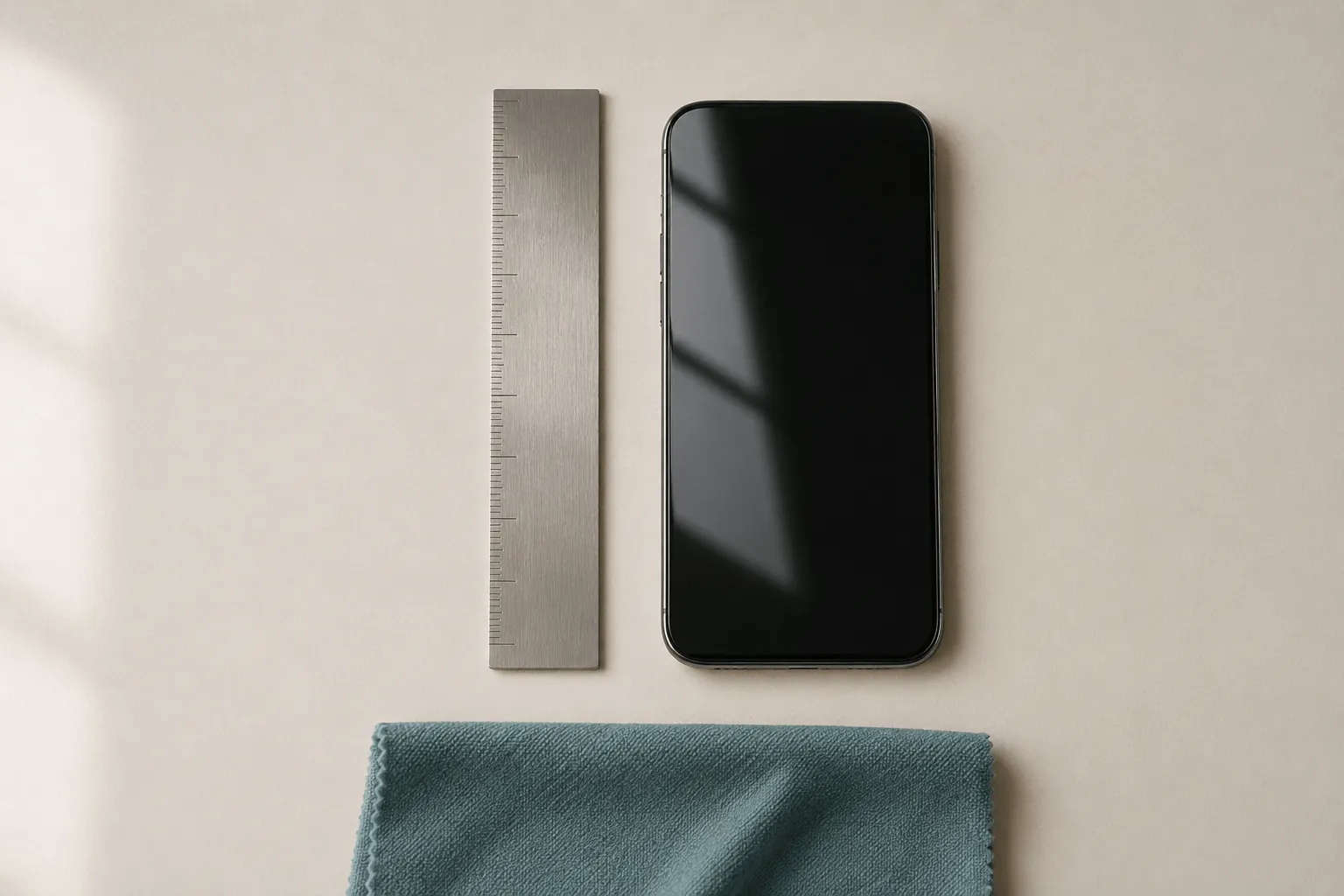
Our pick: Pupillary Distance for iPhone. It measures real depth with the TrueDepth front camera — the thing that, as this article shows, separates accurate apps from the rest — gives you far, near and left/right monocular PD instead of a single number, and keeps every measurement on your iPhone, ad-free. Download it on the App Store.
Are PD apps accurate?
On the published evidence, modern ones agree with clinical equipment closely enough for spectacle manufacture — but the evidence is about specific apps, not about the category.
The most useful measurement comes from a 2024 comparison of PD measurement techniques. Across 40 participants it measured a smartphone front-camera app against a clinical pupillometer and found a mean difference of 0.6 mm, with 95% limits of agreement running from −2.9 to +1.7 mm. The authors judged the resulting prism against a tolerance of 0.33 prism diopters from ISO 16034 and concluded that every method they tested, the app included, stayed inside it.
We make Pupillary Distance and recommend it because it measures depth instead of inferring scale from a photo; if you have a strong prescription or no TrueDepth iPhone, an optician fits better. Two caveats about the study itself:
It tested a different app. The study measured a specific product, not Pupillary Distance, and no published study has independently validated ours. Read the figure as what depth-based smartphone measurement can achieve — the approach Pupillary Distance is built on — rather than a guarantee for any one product.
Limits of agreement are wider than the average. A mean difference of 0.6 mm is a statement about the middle of the distribution. The −2.9 to +1.7 mm band is the more useful number for one person taking one reading, and it is the reason a second measurement is worth taking.
Why do older studies say apps are terrible?
Because they were testing a genuinely different technology.
The most-cited sceptical result is a 2012 study of self-measurement accuracy, which found an iPod app the least accurate and least repeatable of the consumer methods it tried — repeating to only about 6.5 mm either way, worse than a person with a ruler and a mirror.
That finding was correct for what it measured, and it is fourteen years old. Those apps worked from an ordinary flat photograph, which contains no scale: an image cannot tell you whether it is showing a large face far away or a small one close up. To get millimeters out of pixels, the app needed a reference object of known size held against the face, usually a credit card. Every bit of error in placing that card — tilted, not touching the brow, not in the same plane as the pupils — went straight into the result.
A depth-sensing front camera removes that entire class of error, because the scale is measured rather than inferred. That is why results from before and after the change are not comparable, and why “apps are inaccurate” is a claim with an expiry date on it.
What makes one app more accurate than another?
One thing, mostly: whether it measures depth.
| Approach | How it gets millimeters | Main source of error |
|---|---|---|
| Depth-sensing front camera | Builds a 3D model of the face; reads the distance between pupil centers directly | Lighting, movement, glasses left on |
| Photo plus reference card | Infers scale from an object of known size in the image | Card placement, tilt, and its distance from the plane of your pupils |
| Photo alone | Estimates scale from assumed face proportions | The assumption itself — faces vary |
There is a second, smaller differentiator: what the app reports. A single far PD covers ordinary distance glasses. Near PD and per-eye monocular values are what progressives and strong prescriptions need, and an app that returns only one number leaves you converting — or guessing — for the others.
Pupillary Distance is in the first row on both counts: it reads depth through the TrueDepth front camera and returns far, near and monocular PD in the same pass. Get it on the App Store.
How does an app compare with a ruler, or with an optician?
Against the two studies above:
| Method | Agreement with a pupillometer | Repeatability |
|---|---|---|
| Optician with a PD rule | About 0.6 mm mean difference | About ±1 mm |
| Depth-camera phone app | 0.6 mm mean difference, limits −2.9 to +1.7 mm (2024 study) | Not reported in millimeters by that study |
| You, with a ruler and a mirror | Individual readings off by as much as 5–6 mm in either direction | About ±4 mm |
| Photo-based phone app (2012) | The least accurate method tested | About ±6.5 mm |
The pupillometer is the reference standard, so an optician remains the most reliable route if one is available to you. The interesting comparison is the middle two rows: the thing a phone with a depth camera is competing against, for most people ordering online, is not an optician — it is themselves, holding a ruler in a bathroom mirror.
If that’s you and you have a TrueDepth iPhone, skip the mirror: measure your PD with Pupillary Distance.
Is there a PD app for Android?
Depth-sensing front cameras are far less consistent across Android hardware than on iPhone, so Android PD apps more often fall back on the photo-and-reference-card approach — the one the older studies measured badly.
Our own app is iPhone-only for exactly that reason: it is built on the TrueDepth front camera and does not have a meaningful fallback without one. If you are on Android, a careful ruler measurement averaged over three attempts, or asking an optician, will serve you better than a photo-based app.
So should you use one?
For ordinary distance glasses, a depth-based app is a reasonable way to get a number — on iPhone, our pick is Pupillary Distance — and the published comparison suggests it lands closer to a clinical reading than measuring yourself in a mirror does. Take two readings rather than one. Our guide to measuring PD at home covers the alternatives with the same honesty about their limits, and the PD calculator will sanity-check whatever number you end up with against the published adult distribution.
For progressives, high powers, or a child’s glasses, treat any home measurement as a starting point and let an eye-care professional confirm it. That is not a disclaimer for its own sake — it is where the margin for error genuinely runs out.
Frequently asked questions
Keep reading
Is Pupillary Distance the Same as Axis?
Is pupillary distance the same as axis? No — PD is in millimeters, axis in degrees. Why the two get confused on a prescription, and what a mix-up does.
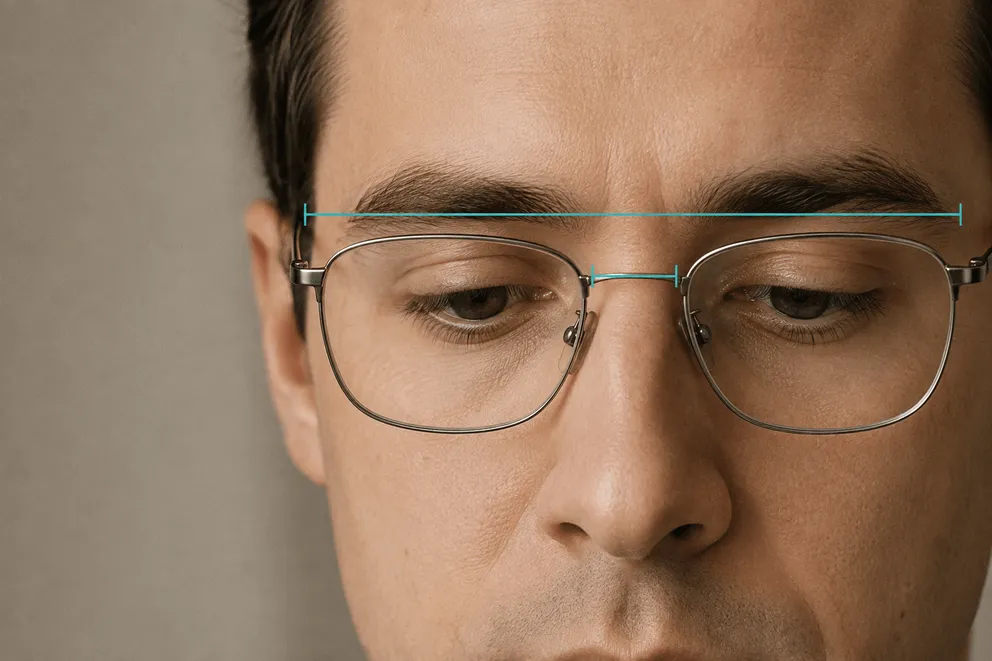
How to Measure Your Face for Glasses (Frame Width, Bridge & Lens Size)
Measure your face for glasses: the three numbers on every frame, taking them from an old pair or your face, which one decides the fit, and where PD fits.
4.4★ · 310+ Reviews
Your PD, measured in under a minute.
Pupillary Distance turns your iPhone into an accurate PD meter. Measure once, then order glasses online with confidence.