Where Is the PD on Your Glasses Prescription?
4 MIN READ
By Pupillary Distance Team ·
Written by the team that builds the app, not by clinicians — how we research and source these guides.
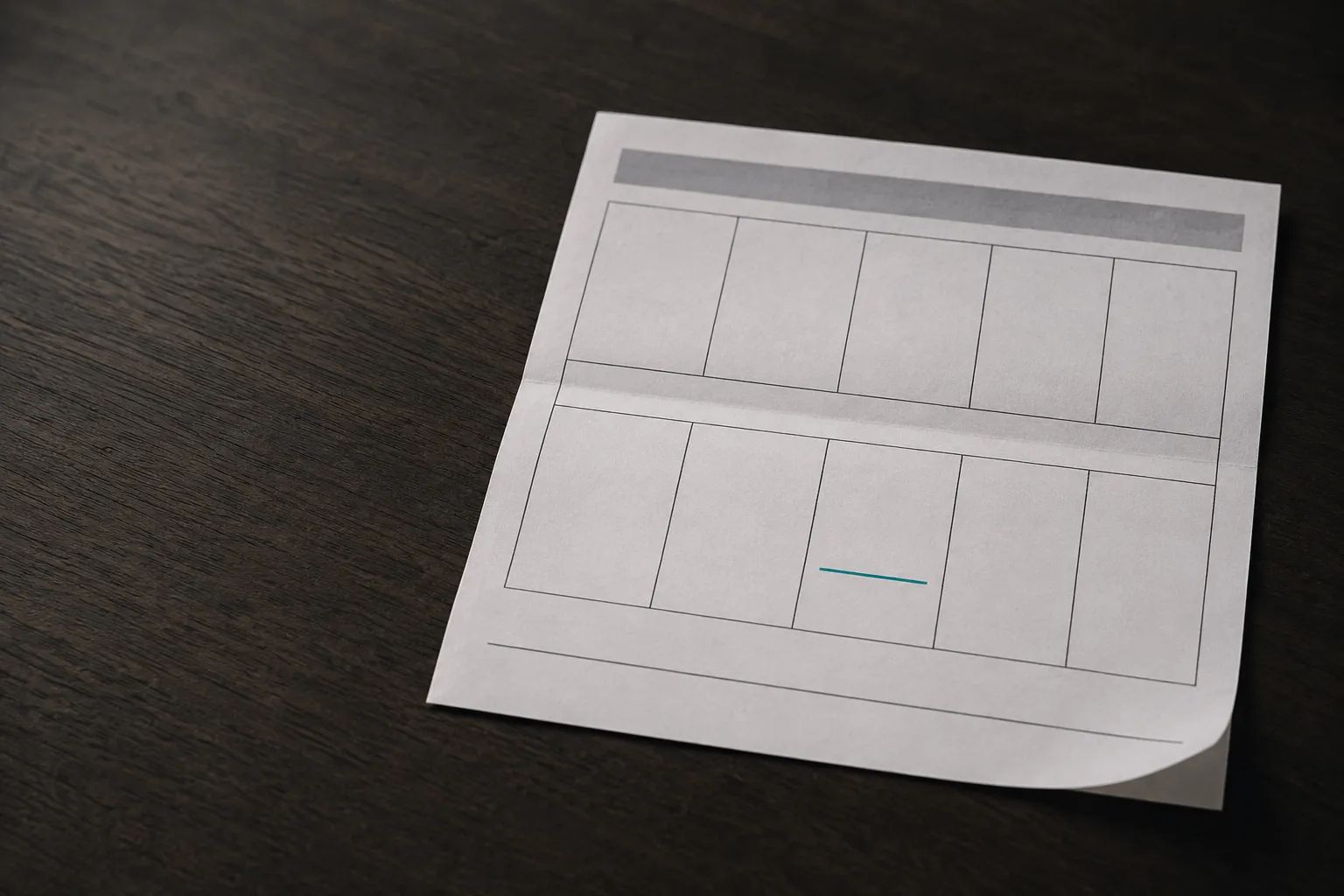
Where is the PD on a glasses prescription?
If your prescription carries a PD at all, it will be in a field labelled PD, sitting apart from the main grid. That grid is organised by eye — one row for the right, one for the left — while your pupillary distance is a measurement across your face rather than a correction for either eye, so it does not belong in either row. In practice it usually turns up near the bottom, beside the date, the signature, or the lens recommendations.
You may find one number or two. A single figure like 63 is a binocular PD. A pair like 32 / 31 is monocular PD — the distance from the bridge of your nose to each pupil, measured separately. Both describe the same face.
If you look through the whole sheet and there is no PD anywhere, nothing has gone wrong. That is the common case, and the next section explains why.
Why is my pupillary distance not on my prescription?
Because it usually isn’t required to be there.
In the United States, the FTC’s Eyeglass Rule requires your prescriber to give you a copy of your prescription after an eye exam, whether or not you ask for it, so you can take your business anywhere. What that rule covers is the refraction — the correction your eyes need. Pupillary distance is a dispensing measurement: it is taken when glasses are being fitted, to position each lens in front of each eye, and it belongs to the frame-fitting step rather than the sight test.
So an optometrist who examines your eyes and hands you a prescription has done their job completely without measuring your PD at all. If you then buy your glasses in that same practice, someone measures it during fitting and it never needs to be written down. It becomes conspicuous only when you take the prescription elsewhere — which, since online retailers do the dispensing at a distance, is exactly when you need it.
That is the whole reason this is such a common problem, and why it feels like an omission rather than a boundary between two different jobs.
What do OD, OS and OU mean?
The abbreviations on the grid are Latin, which is why they are not intuitive.
| Abbreviation | Meaning |
|---|---|
| OD | Oculus dexter — your right eye |
| OS | Oculus sinister — your left eye |
| OU | Oculus uterque — both eyes |
| SPH | Sphere: the main lens power, in diopters. Minus for nearsighted, plus for farsighted |
| CYL | Cylinder: the extra power for astigmatism, if any |
| AXIS | The orientation of that cylinder, in degrees from 1 to 180 |
| ADD | The added reading power in bifocals and progressives |
Two things follow. First, PD is not an OD or OS value — if you see a number in those rows, it is a lens power, not a distance. Second, if your prescription lists two PD numbers, they are usually written in the same right-then-left order the grid uses.
An easy trap: axis and PD are both numbers in the 30s to 180s, and they measure completely unrelated things. Axis is an angle describing how astigmatism is oriented; PD is a distance in millimeters between your pupils. Copying one into a form expecting the other produces lenses that are wrong in a way that is hard to diagnose afterwards.
How do you get your PD when the prescription doesn’t have it?
Three routes, in the order most people find useful.
Ask, during the appointment. An optometrist measures PD in seconds with a pupillometer, and it is the most accurate number you will get. The timing matters: ask while you are there. Some practices treat it as part of dispensing and will not retrospectively add it to a prescription that has already been issued.
Measure it yourself. A millimeter ruler and a mirror, or a friend with the same ruler, will get you a workable number — with the caveat that home methods are less precise than people expect and worth repeating and averaging. Our guide to measuring your PD at home covers the methods with the accuracy figures for each, and the printable PD ruler prints at true scale with a calibration check.
Let a phone do it. An iPhone with a TrueDepth front camera measures the distance between your pupils directly, without a ruler to keep level or a second person. The Pupillary Distance app returns far PD, near PD and both monocular values in one pass, which covers whichever format the retailer’s form asks for.
What not to do is accept a retailer’s default. Adult PD spans roughly 50 mm to 75 mm, so an “average” stand-in can be several millimeters away from yours — and a few millimeters is precisely the margin that decides whether each lens is centered on your eye. If you already have a number and want to check it is plausible, or convert it between far, near and per-eye values, the PD calculator does both.
As always: this is about a measurement, not your eye health. If your vision has changed or new glasses still feel wrong after the PD checks out, that is a conversation for an optometrist or ophthalmologist.
Frequently asked questions
Keep reading
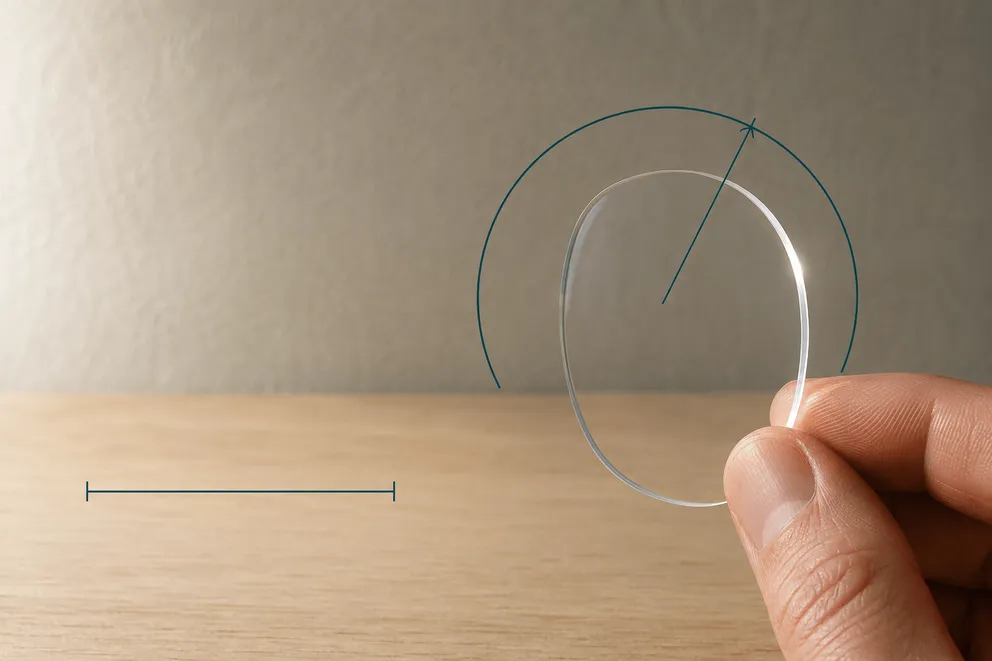
Is Pupillary Distance the Same as Axis?
Is pupillary distance the same as axis? No — PD is in millimeters, axis in degrees. Why the two get confused on a prescription, and what a mix-up does.
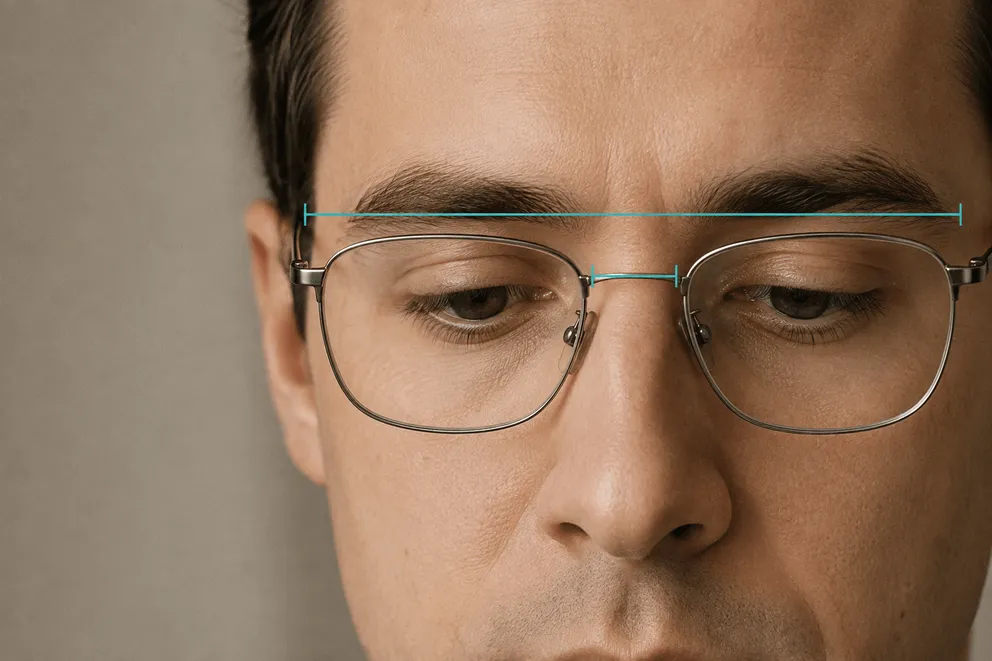
How to Measure Your Face for Glasses (Frame Width, Bridge & Lens Size)
Measure your face for glasses: the three numbers on every frame, taking them from an old pair or your face, which one decides the fit, and where PD fits.
4.4★ · 310+ Reviews
Your PD, measured in under a minute.
Pupillary Distance turns your iPhone into an accurate PD meter. Measure once, then order glasses online with confidence.