Near PD vs Far PD: Why You Have Two Numbers
4 MIN READ
By Pupillary Distance Team ·
Written by the team that builds the app, not by clinicians — how we research and source these guides.
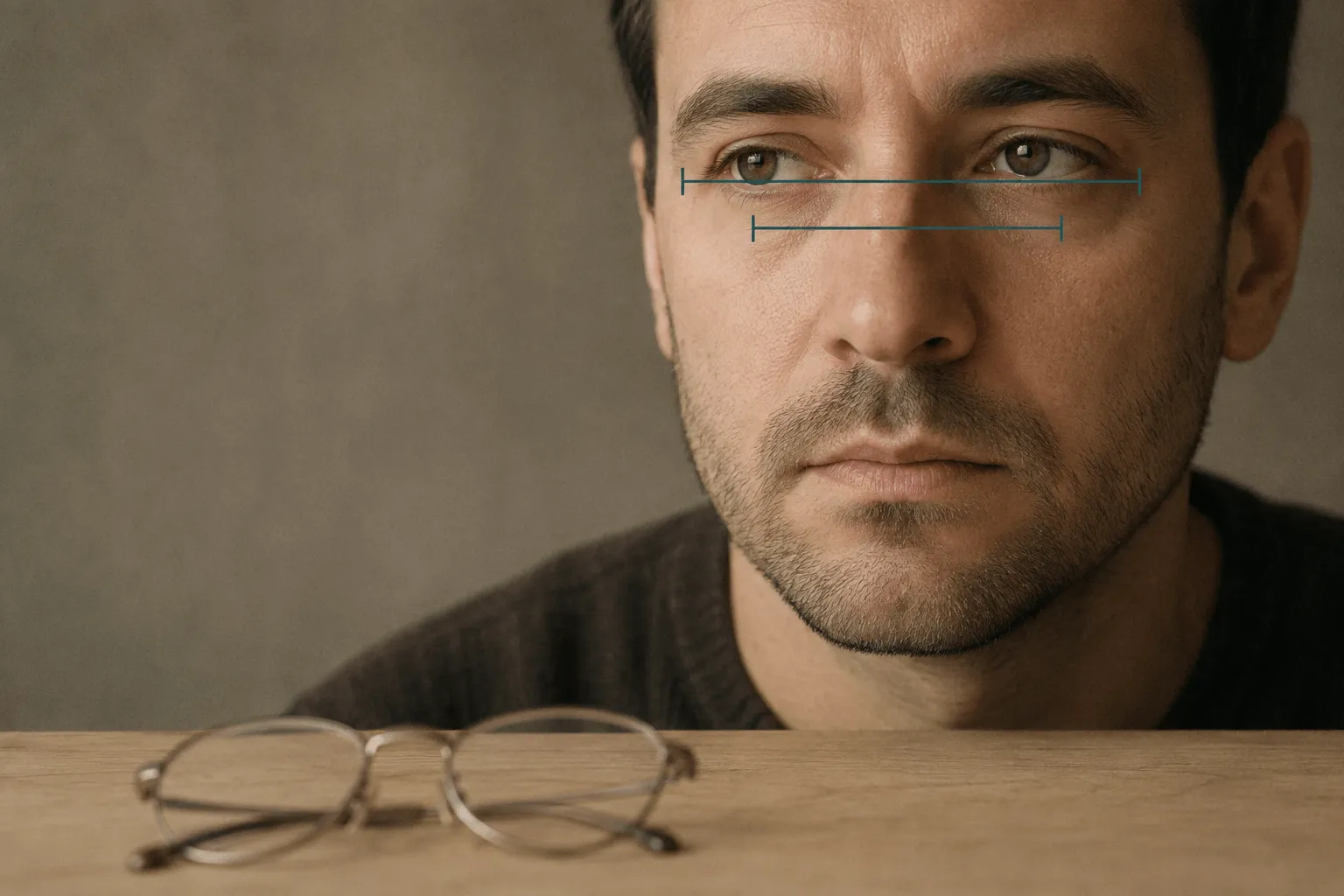
What is the difference between far PD and near PD?
Both measure the distance between the centers of your pupils. The difference is where you are looking while it is taken.
Far PD is measured with your eyes relaxed on something distant. This is the number most people mean by “my PD”, and it is what an online form is asking for unless it says otherwise.
Near PD is measured with your eyes converged on something close. Convergence rotates both eyes inward, which brings your pupils together, so this number is smaller.
Neither is more correct than the other. They describe the same face doing two different things, and they exist because glasses are made for one job or the other.
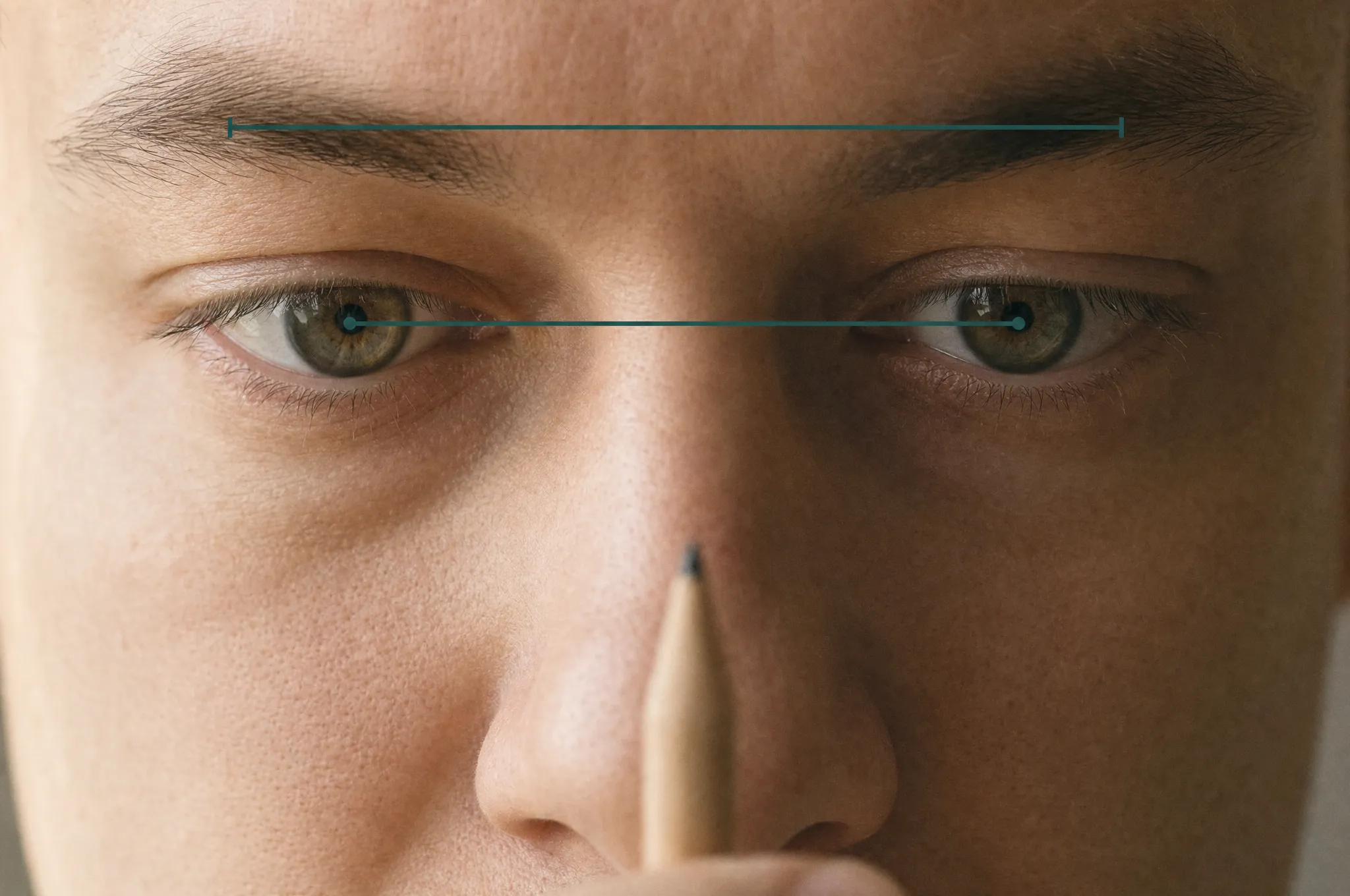
How much smaller is near PD?
Around 3 millimeters, and two independent studies land in the same place.
A 2021 study of manual and automatic PD measurements reported distance binocular PD roughly 3 mm wider than near PD, with a mean difference of 3.5 mm in women and 3.3 mm in men. A 2024 comparison of measurement techniques measured 64.2 mm at distance against 61.1 mm at near using a pupillometer — a gap of 3.1 mm.
Two things follow. First, 3 mm is a reasonable working estimate when you need to convert. Second — and this is the part worth holding onto — 3 mm is larger than the entire average difference between men’s and women’s PDs. Using the wrong one of your two numbers is a bigger error than using someone else’s average.
Why does my prescription show two numbers?
Usually not because they are far and near. A pair like 32 / 31 is almost always monocular PD: the same total distance split at the bridge of your nose, one value per eye, so 32 and 31 describe the same face as a binocular 63.
The labels tell you which you are looking at. OD and OS (right and left eye) alongside the pair means monocular; D and N, or “dist” and “near”, means the far/near distinction this post is about. If the pair is not labelled at all, ask rather than guess — the two interpretations differ by enough to matter.
Which number do you need?
| Glasses | Which PD | Why |
|---|---|---|
| Everyday / distance | Far PD, binocular | Eyes are relaxed at distance; one number is enough for single-vision |
| Reading glasses | Near PD | Used at close range where your eyes converge |
| Progressives | Both, and monocular | The corridor between zones is narrow, so each lens must be centered on its own eye |
| Strong single-vision | Far PD, ideally monocular | Prism from decentration scales with lens power, so symmetry assumptions cost more |
If a form asks for “PD” with no qualifier and you are buying ordinary distance glasses, it wants your far binocular PD.
Can you convert between them?
Approximately. Subtracting about 3 mm from your far PD gets you a workable near PD, and that is exactly what the PD calculator does — it also splits a binocular number into per-eye estimates and converts to inches.
Treat both conversions as estimates. The real near-far difference depends on how much your eyes converge and at what distance, and the per-eye split assumes a symmetry your face may not have. For reading glasses in a weak prescription, the estimate is fine. For progressives or anything strong, measure rather than derive — that is precisely the case where the assumptions cost you.
How do you measure near and monocular PD at home?
This is where the home methods struggle. A ruler in a mirror gives you one number, and it is hard to know which of your two PDs you just measured — your reflection sits about twice the mirror distance away, so a mirror reading behaves more like a near PD than a far one. Monocular values are harder still, because you have to locate the center of your own nose bridge and hold a ruler steady from it.
Our guide to measuring your PD at home covers what each method can and cannot give you. The short version: for a single far PD, a careful ruler measurement averaged over three attempts is workable; for near and monocular values, a phone measurement is the practical route, and the Pupillary Distance app returns far, near and both monocular numbers in one pass rather than making you convert.
As always, this is about a measurement rather than your eye health. If your reading glasses feel wrong even with the right near PD, that is a question for an optometrist or ophthalmologist.
Frequently asked questions
Keep reading
Is Pupillary Distance the Same as Axis?
Is pupillary distance the same as axis? No — PD is in millimeters, axis in degrees. Why the two get confused on a prescription, and what a mix-up does.
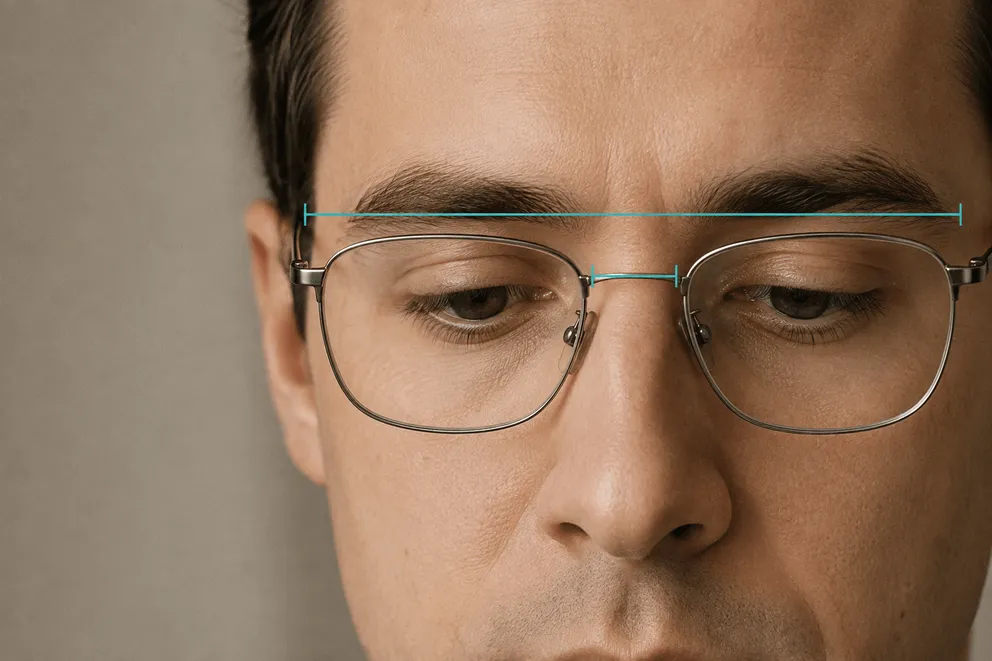
How to Measure Your Face for Glasses (Frame Width, Bridge & Lens Size)
Measure your face for glasses: the three numbers on every frame, taking them from an old pair or your face, which one decides the fit, and where PD fits.
4.4★ · 310+ Reviews
Your PD, measured in under a minute.
Pupillary Distance turns your iPhone into an accurate PD meter. Measure once, then order glasses online with confidence.